Developed with clinicians, BrainyAct sets a new standard and delivers an evidence-based approach with measurable outcomes in as little as six months.




Program Foundation
Coordination
& Timing
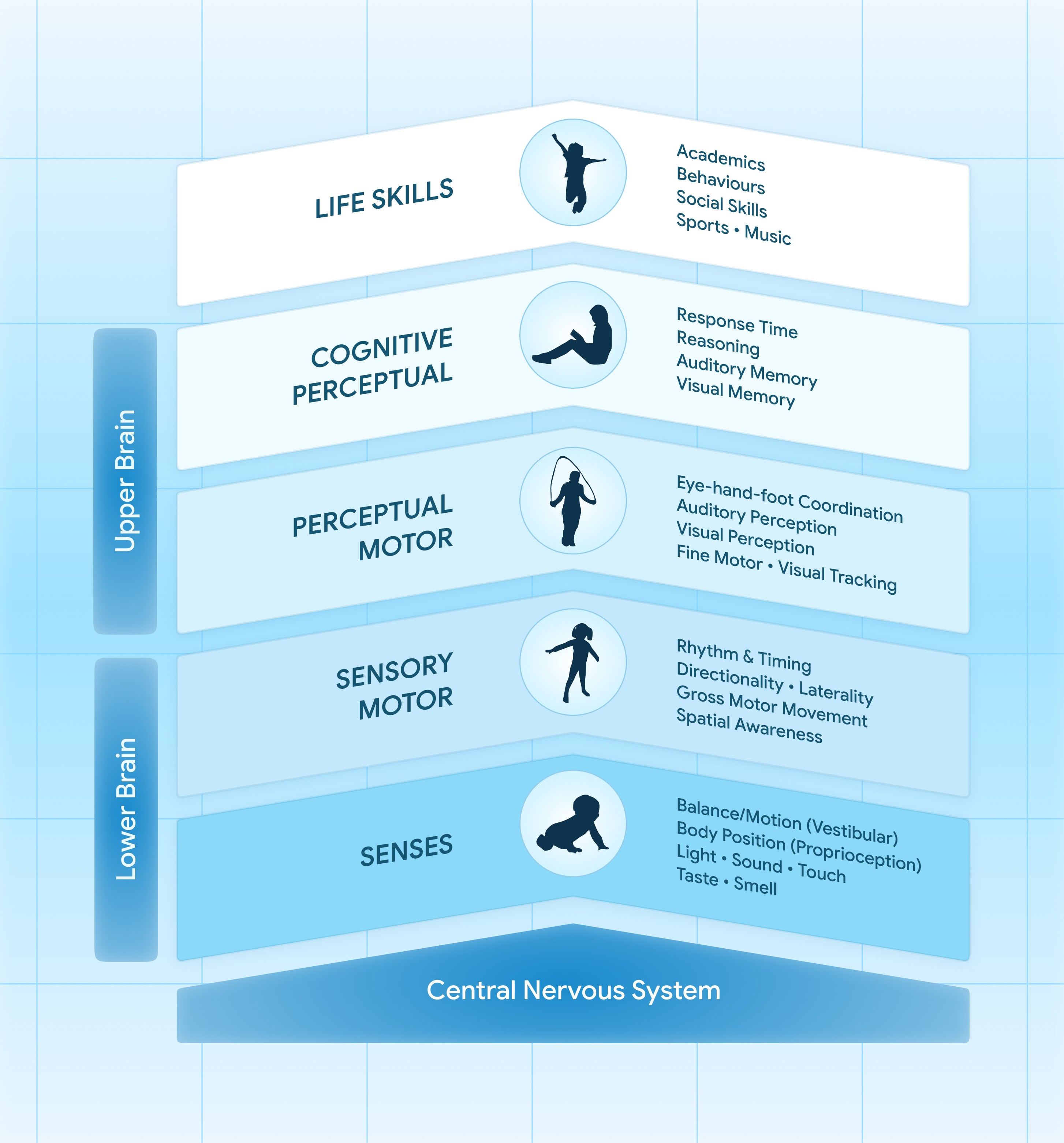
When these foundational systems improve, higher‑level cognitive and academic skills often become easier to develop.
Neuroplasticity
The brain has the ability to reorganize itself in response to repeated, meaningful input. Targeted sensorimotor experiences delivered with repetition, progression, and feedback can strengthen neural pathways and improve functional skills.
Cerebellar Function
Modern neuroscience identifies the cerebellum as a key structure supporting not only movement but also attention, language, emotional regulation, timing, and prediction. Interventions that target cerebellar‑dependent systems such as balance, rhythm, and coordination may support higher‑order cognitive functions.
Motor Development and Learning
Research demonstrates strong relationships between motor proficiency and academic outcomes including reading fluency, handwriting, visual‑motor integration, and processing speed. Improving foundational motor systems can increase readiness for learning.
Shared Neurological Patterns
Neurodevelopmental conditions such as ADHD, autism spectrum disorder, and dyslexia frequently share patterns including coordination differences, sensory integration challenges, and timing deficits. Interventions targeting these shared neurological foundations may support improvements across multiple functional domains.
The Developmental Sequence
BrainyAct follows a developmental sequence:
1
2
3
4
Children first strengthen foundational systems such as body control, sensory processing, and emotional regulation. As these systems improve, children become better able to focus attention, engage in activities, participate in learning environments, and build independence.
Mechanism of Change
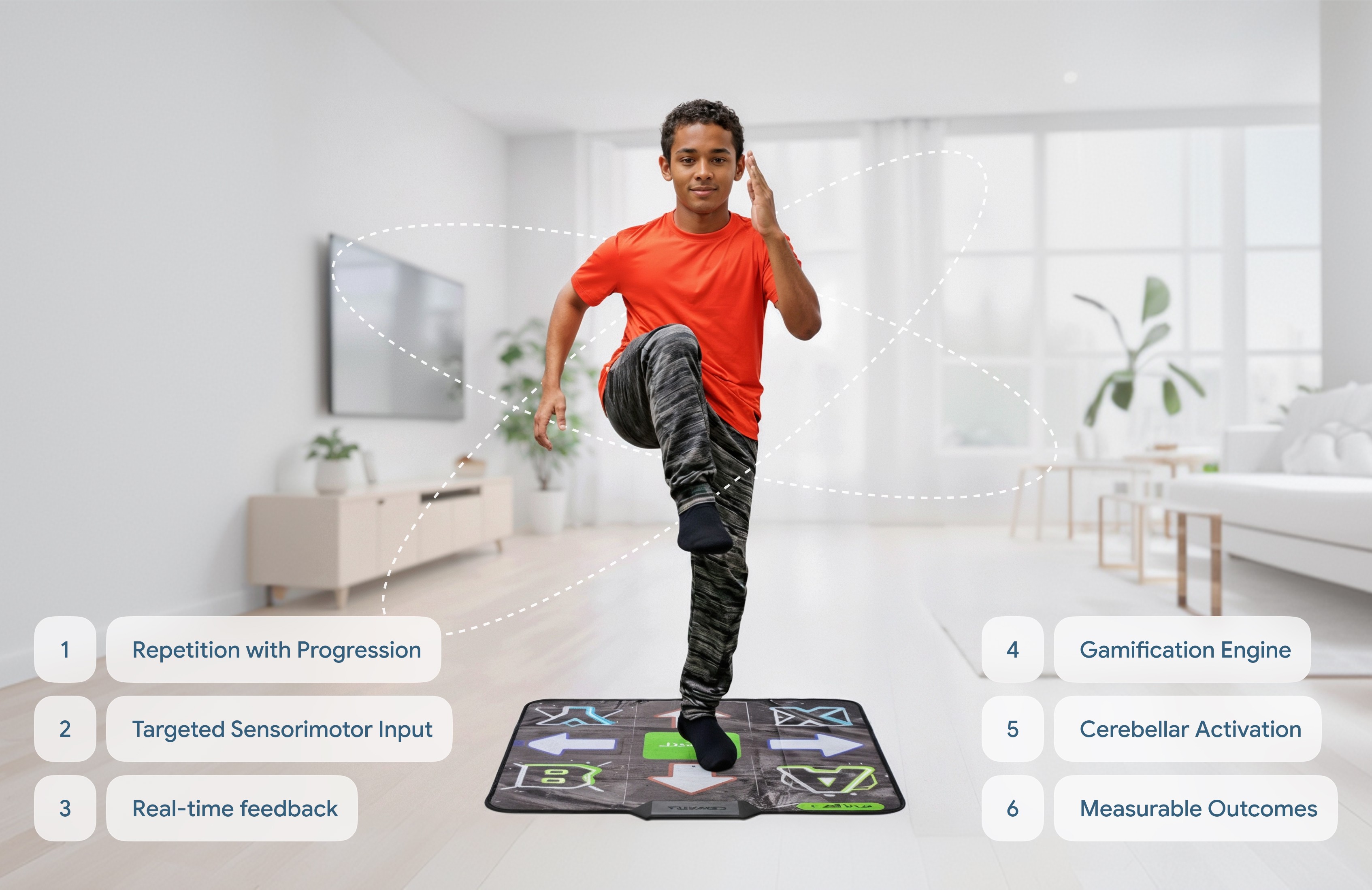
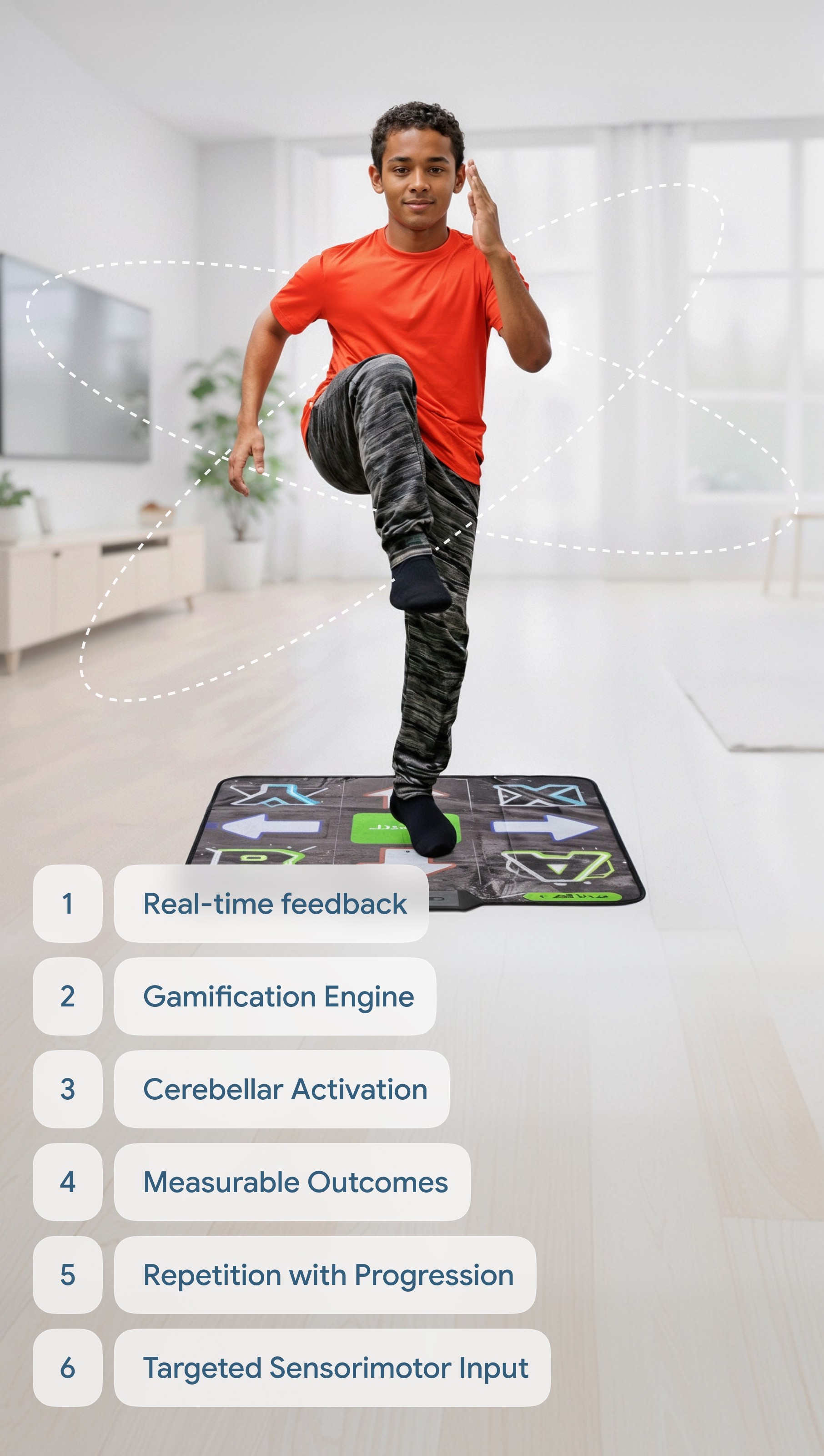
The following elements align with established motor‑learning and neuroplasticity research demonstrating that targeted, structured intervention can produce meaningful neural change:
Families, educators, and clinicians commonly report improvements including:
Improved communication
Higher independence
in daily routines
Greater Confidence
Improved engagement
in therapy & learning
Stronger emotional regulation
Better classroom participation
📎
Motor Development and Academic Skills
• Cameron, C. E., et al. (2012). Fine motor skills and executive function both contribute to kindergarten achievement. Child Development.
• Grissmer, D., et al. (2010). Fine motor skills and early comprehension of the world. Developmental Psychology.
📎
Cerebellum and Cognition
• Buckner, R. L. (2013). The cerebellum and cognitive function. Trends in Cognitive Sciences.
• Stoodley, C. J., & Schmahmann, J. D. (2009). Functional topography in the human cerebellum. NeuroImage.
📎
ADHD and Sensorimotor Intervention
• Leisman, G., & Melillo, R. (2010). Effects of hemisphere‑specific remediation strategies on ADHD. International Journal of Adolescent Medicine and Health.
📎
Neuroplasticity and Motor Learning
• Kleim, J. A., & Jones, T. A. (2008). Principles of experience‑dependent neural plasticity. Journal of Speech, Language, and Hearing Research.
• Kolb, B., & Gibb, R. (2011). Brain plasticity and behaviour in the developing brain. Journal of the Canadian Academy of Child and Adolescent Psychiatry.






Resources